Features
Explore Agentic AI features for knowledge training, API integrations, multi-agent workflows and omnichannel deployment to build smarter business automation.
1. Knowledge Base Training
Agentic AI allows you to train agents using structured and unstructured data sources such as documents, FAQs, and URLs.
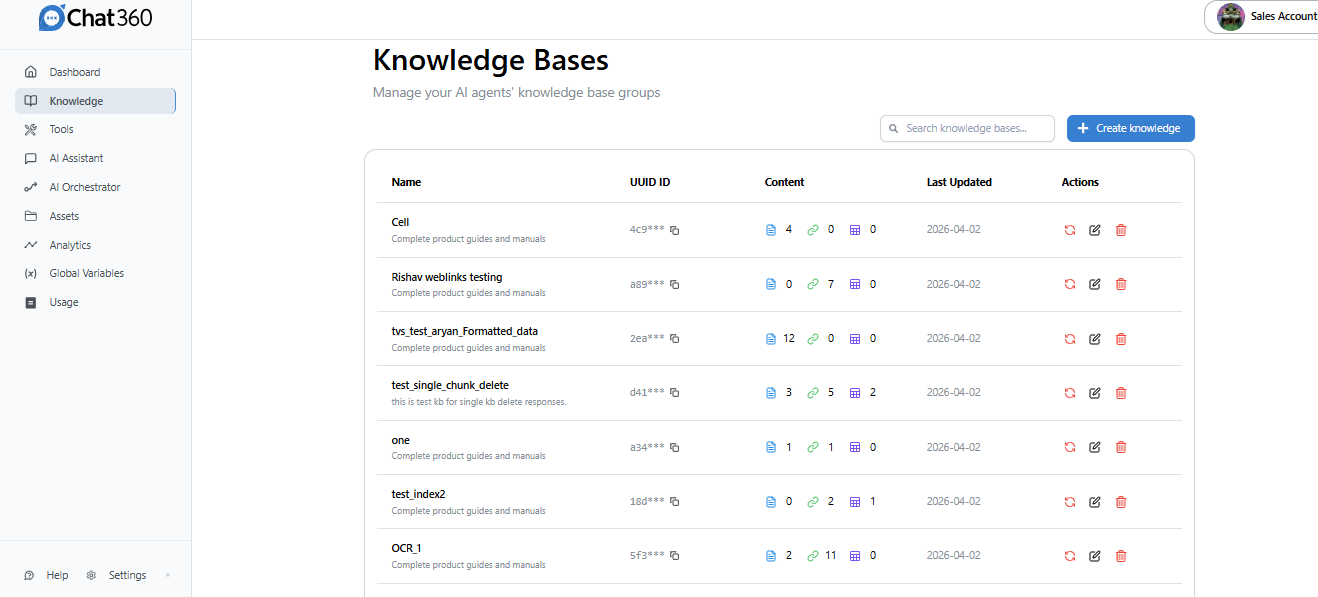
Capabilities:
Train using multiple data sources
Continuously update and retrain without rebuilding flows
Provide context-aware and accurate responses
Benefits:
Reduces manual effort in defining responses
Improves answer accuracy and consistency
Enables automated support and knowledge-driven interactions
2. URL Training
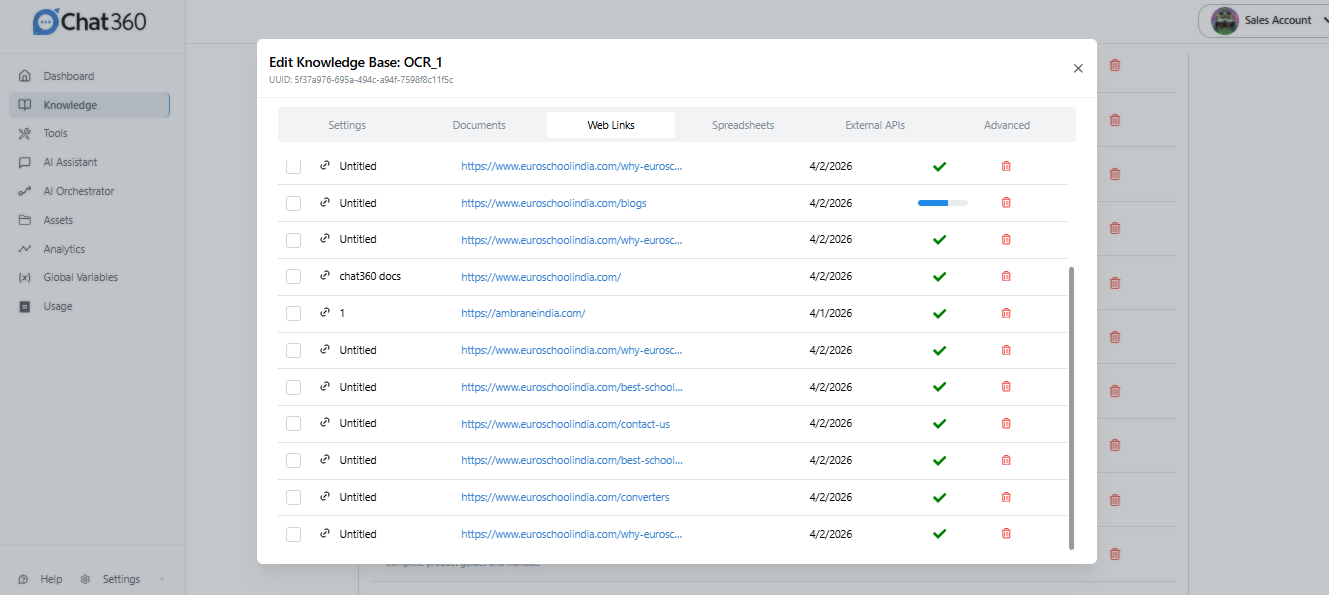
Agents can be trained directly using website URLs, making it easy to ingest and utilize external content.
Capabilities:
Add multiple URLs without strict limits
Automatically fetch and process content
Keep knowledge updated with minimal effort
Benefits:
Quick setup without manual data entry
Dynamic updates as website content changes
Ideal for FAQs, product pages, and documentation
3. API Integration
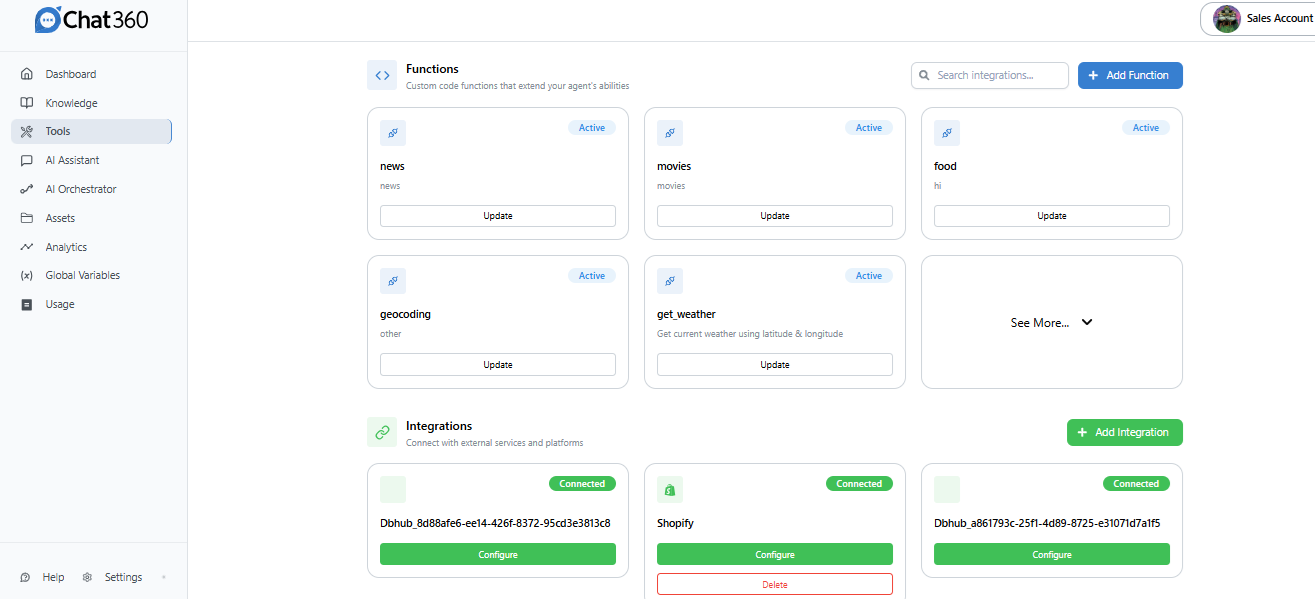
Agentic AI supports integration with external systems through APIs, making agents capable of performing real-time actions.
Capabilities:
Support for GET, POST, and PUT methods
Real-time (in-call) and post-action execution
Custom configuration of headers, parameters, and request body
Benefits:
Fetch real-time data (orders, accounts, etc.)
Update or create records in external systems
Enable transactional and action-driven workflows
4. Orchestrator (Multi-Agent Management)
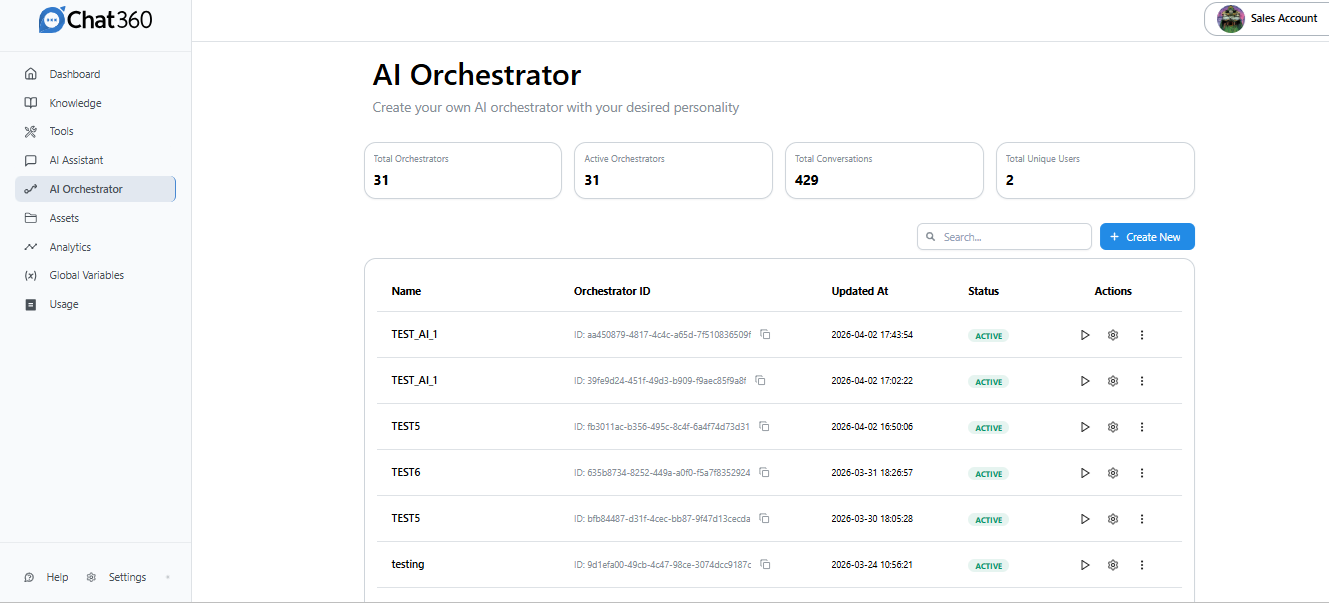
The Orchestrator manages multiple agents and routes queries intelligently.
Capabilities:
Assign different agents for different tasks
Automatically route queries based on intent
Manage complex workflows across agents
Benefits:
Improves efficiency by delegating tasks
Enables specialization across agents
Handles complex, multi-step interactions seamlessly
5. AI Assistants Creation
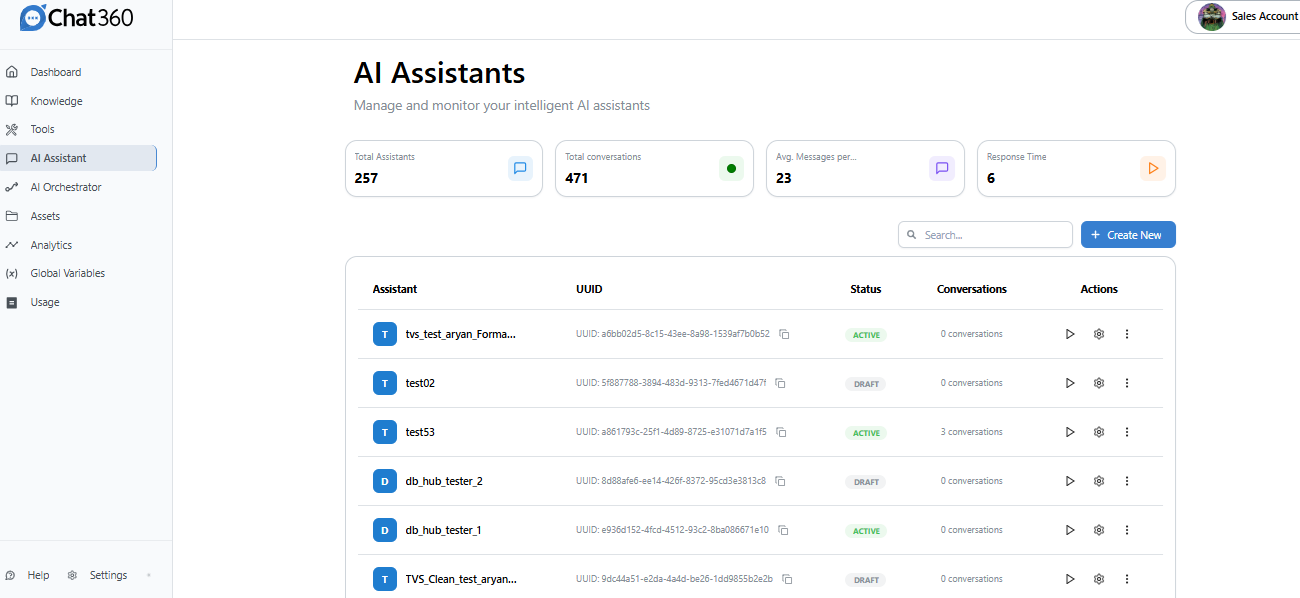
You can create dedicated AI assistants tailored to specific use cases.
Capabilities:
Define assistant behavior and purpose
Customize prompts and responses
Deploy assistants independently or within flows
Benefits:
Build focused solutions (support, sales, operations)
Improve response relevance
Enhance user experience with specialized agents
6. Integration with Bot Components
Agentic AI can be embedded directly into chatbot and voice bot components.
Capabilities:
Use AI within structured bot flows
Combine rule-based logic with AI-generated responses
Trigger AI responses dynamically within conversations
Benefits:
Adds flexibility to traditional bots
Enables hybrid automation (rules + AI)
Improves conversation quality
7. Multi-Agent Architecture
Agentic AI supports creating and managing multiple agents within a single system.
Capabilities:
Create multiple agents with different roles
Assign specific responsibilities to each agent
Scale easily for complex use cases
Benefits:
Better organization and modularity
Easier maintenance and updates
Scalable architecture for growing needs
8. AI Model Utilization
Agentic AI leverages advanced AI models to process and generate responses.
Capabilities:
Natural language understanding and generation
Context-aware response handling
Adaptive behavior based on conversation flow
Benefits:
Human-like conversations
Improved intent recognition
Better user engagement
9. Multi-Channel Deployment
Agentic AI can be deployed across all supported channels in Chat360.
Capabilities:
Integrate with WhatsApp, Web, RCS, and more
Maintain consistent behavior across platforms
Centralized management of agents
Benefits:
Unified experience for users
Reduced effort in managing multiple channels
Scalable deployment strategy
Conclusion
The features of Agentic AI in Chat360 empower businesses to build intelligent, flexible, and action-driven automation systems.
By combining knowledge training, API integrations, multi-agent orchestration, and AI capabilities, Agentic AI transforms traditional bots into powerful digital assistants capable of handling complex real-world scenarios.